
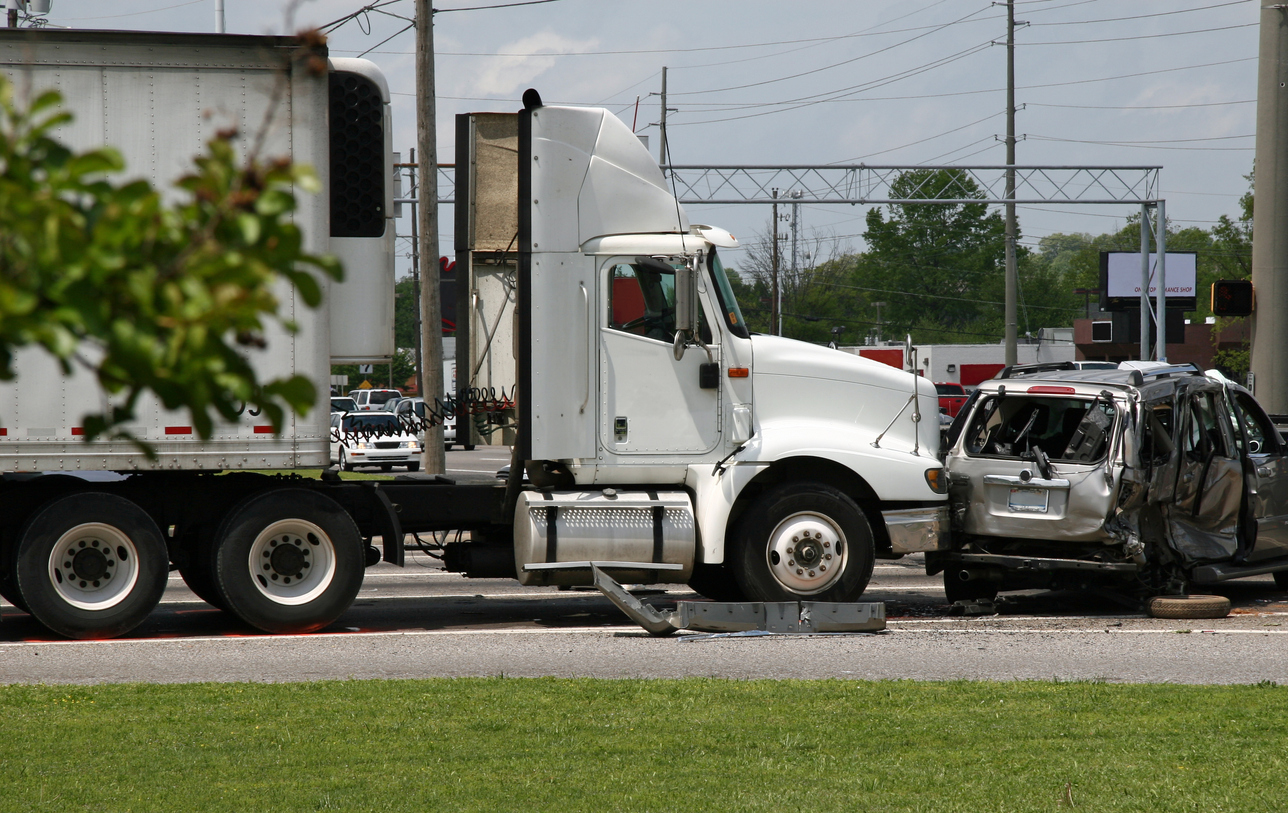

If you were injured in a Chicago truck accident involving either a semi truck, tractor trailer, delivery truck, 18 wheeler truck, or another commercial truck, your claim can involve multiple parties. That’s why a review might be required by a Chicago truck accident lawyer for the driver, carrier, vehicle, cargo, maintenance, insurance, and electronic records. That’s where Attorneys of Chicago Personal Injury Lawyers can help you fight to recover compensation for medical bills, lost wages, and your pain and suffering. Call us at (312) 766-4878 today!
Attorneys of Chicago can evaluate what happened in your accident; identify evidence and relevant deadlines; decide who may be legally responsible; and explain whether we may be able to represent you.
With over 30 years of combined lawyers’ team experience, you can count on our lawyers to work tirelessly to recover every available dollar. We’ve already recovered $+50 million in cumulative compensations on behalf of accident victims, and we’re ready to fight for you. We also offer you a free consultation. No attorney fee unless we recover for you. Case costs and all fee terms are explained in writing before representation begins.
Our team is always available to discuss your case. Contact our law offices to schedule your free consultation today. Our lawyers and other team members are also fluent in Spanish and Arabic.
How Can Attorneys of Chicago Help After a Truck Accident?
The insurance claims process is complicated enough in a simple car accident case. Truck accident lawsuits can become much more complex.
You may be facing off against a large corporation or commercial insurance carrier. It’s important to have a Chicago personal injury attorney who knows the ropes by your side. At Attorneys of Chicago Personal Injury Lawyers, we have decades of experience handling cases similar to yours. Over the years, we’ve been recognized by Super Lawyers and the National Trial Lawyers for our quality legal representation.
Hire us, and you’ll have an advocate to:
- Investigate the circumstances of the accident
- Analyze all available evidence to build the strongest claim possible
- Work with experts who can strengthen your case
- Calculate your case value
- Protect you from insurance scare tactics and “blame the victim” strategies
- Negotiate for the maximum compensation possible
Don’t wait too long to seek legal advice if you were injured in an accident.
Do I Need a Lawyer After a Chicago Truck Accident?
Not every truck accident requires legal representation. For example, if no one was injured, fault is clear, and the dispute involves only minor vehicle damage, you can work with the insurers directly.
A legal review becomes more important if:
- You were injured, hospitalized, unable to work, or still have symptoms.
- The crash caused a death or a potentially permanent impairment.
- The trucking or insurance company disputes fault or blames you.
- The tractor, trailer, cargo, driver, and carrier involve different people or companies.
- The collision involved a work zone, government vehicle, public roadway condition, or another party with a potentially shorter deadline.
- Driver logs, vehicle data, cameras, dispatch records, maintenance files, or cargo documents may matter.
- An insurer requests a recorded statement, broad medical authorization, inspection, or final release.
- Several vehicles or insurance policies may be involved.
- An offer does not account for the documented medical, income, and long-term effects.
You do not need to identify the carrier relationship or legal theory before calling. A case review is a chance to discuss the basic facts and learn whether the firm may be able to help. Contacting the firm does not mean the firm has accepted the matter.
Why Should I Hire a Truck Accident Lawyer in Chicago?

Truck accident cases can be extremely complicated. They often involve serious injuries, extensive damages, and commercial vehicle insurance policies. Not surprisingly, trucking and insurance companies fight truck accident claims tooth and nail. They will invest significant assets in challenging your case.
What makes the investigation different is the number of possible relationships and record sources. The tractor and trailer may have different owners. The driver may work for a carrier, drive as an independent contractor, or have another arrangement. Many parties like the shipper, leasing company, or other contractor may appear in the documents without necessarily being legally responsible. Insurance coverage may also differ by case.
That’s why you need an experienced advocate who can protect your rights and ensure these big companies pay you fair compensation. A lawyer can investigate your accident to gather evidence of the trucking company’s liability. They can also work with leading experts to prove fault. Perhaps most importantly, they can help you calculate the value of your damages so you know you’re getting a fair shake in your case.
How Attorneys of Chicago Handles a Truck Accident Claim
The work varies with the crash, the parties, the injuries, and the available evidence. An accepted matter may involve the following stages.
1. Check urgent medical, deadline, and evidence issues
We begin with when and where the truck accident happened, the vehicles and companies involved, police and medical response, known witnesses or cameras, insurer contact, and any reason a legal or contractual deadline may be shorter than expected.
When the facts support it, early work may include identifying people or businesses that could possess relevant records and sending appropriate preservation requests. A request does not guarantee that a record exists, is still retained, is legally obtainable, or will help the claim.
2. Reconstruct how the collision happened
The investigation may use crash reports, scene and vehicle photographs, measurements, video, witness accounts, repair and inspection information, and available event or location data. A reconstruction professional or another qualified expert may be consulted when the issues require specialized analysis.
The evidence needed for a rear-end collision may differ from the evidence needed for a jackknife, rollover, lost-load, wide-turn, tire, brake, or underride crash.
3. Identify the operating relationships and responsible parties
We may examine who employed or contracted with the driver, who operated under whose authority, who owned or controlled the tractor and trailer, who loaded or maintained the equipment, and what each party actually did.
The presence of a company name in a document does not by itself prove liability. Each proposed claim requires a legally recognized duty, supporting facts, causation, and damages.
4. Identify potentially applicable insurance
Depending on the facts, the matter may involve commercial automobile liability coverage, employer or contractor coverage, trailer or equipment coverage, excess or umbrella policies, or the injured person’s own applicable coverage. Policy language, exclusions, limits, insured status, and the activity underway at the time can matter.
A commercial vehicle does not automatically mean that every loss is covered or that unlimited insurance is available. Coverage must be confirmed rather than assumed.
5. Document the injuries and losses
Medical records, bills, imaging, work and income records, photographs, testimony, and qualified opinions may be needed to show what the crash caused and how it affected treatment, work, mobility, independence, and future needs.
6. Present the claim and respond to disputes
When liability and loss evidence are sufficiently developed, we may prepare a supported demand and address disputes over fault, causation, treatment, insurance, responsible parties, and damages.
7. Negotiate or litigate
Some cases resolve through negotiation. Others require a lawsuit, written discovery, depositions, expert work, motions, mediation, or trial preparation. The client decides whether to accept or reject a settlement after receiving legal advice. Filing suit does not guarantee a trial, and no outcome is guaranteed.
Chicago, IL Truck Accident Statistics
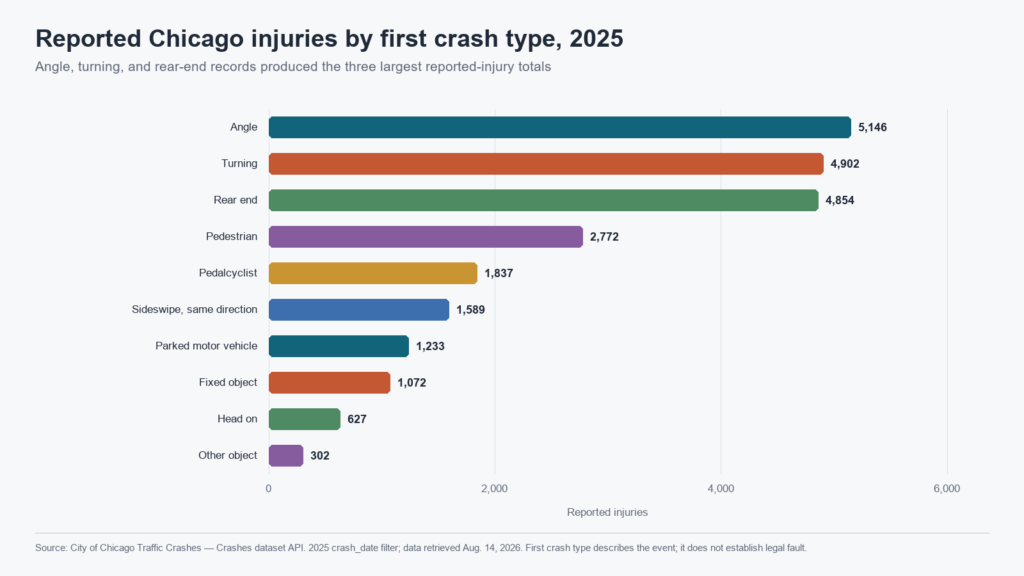
The trucking industry is vital to the U.S. economy. Unfortunately, when trucks are involved in accidents, the resulting injuries can be severe–especially for passengers in smaller vehicles.Large trucks remain involved in thousands of serious crashes each year. The FMCSA reports that approximately 503,000 U.S. crashes involved large trucks in 2022, including 5,279 fatal crashes and 114,000 injury crashes. In Illinois, IDOT’s 2024 data counted 21,436 single-unit trucks and truck-tractors with semi-trailers involved in crashes, including 135 involved in fatal crashes and 3,368 involved in injury crashes.
What Are Common Causes of Truck Accidents in Chicago, IL?
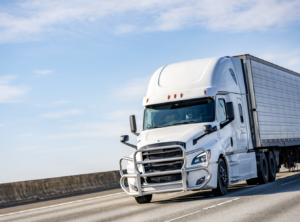
When you hire us, you’ll be hiring an entire team who will determine the cause of your accident. The leading causes of truck accidents are negligence and driver error.
More specifically, some of the most common causes include:
- Fatigued driving and violations of FMCSA hours-of-service rules
- Distracted driving, including texting while driving
- Dangerous turns
- Passing too closely to other vehicles
- Failure to yield the right-of-way
- Tailgating
- Speeding
- Aggressive driving
- Failure to account for longer stopping times
- Inexperienced drivers
- Negligent hiring practices
- Failure to maintain the vehicle in safe, working condition
- Oversize truck load accidents
- Running a red light or stop sign
- Drunk driving or under the influence of drugs
- Slick roads and other hazardous road conditions
Uncovering the cause of your accident is critical to recovering fair compensation. If you need help determining the cause of your crash, reach out to our lawyers for a free case review.
How Much Is My Chicago Truck Accident Case Worth?

In cases involving large trucks, a commercial insurance policy is often at stake. That means more money is on the line. It also means that the insurance company might quickly begin pressuring you to accept a settlement. We should note that there is no reliable online calculator for an individual truck claim. A commercial vehicle or policy does not create an automatic settlement amount.
It’s important to understand how much you really deserve.
The value of your personal injury case will depend on:
- The severity of your injuries
- The circumstances of the accident
- The cost of your medical treatment and other expenses
- The income you lost during recovery
- How the injury will change your future, including your ability to work and earn a living
- How the injury changes your quality of life
- Damage to your emotional health
After a serious truck crash, you may be faced with more expenses than you could have imagined. It’s critical to understand how much your case is worth before accepting the insurance company’s settlement offer.
What Compensation Can I Recover in a Truck Crash Lawsuit?
Two primary types of compensation are available to victims: economic damages and non-economic damages.
Recoverable damages depend on the claims, evidence, injuries, insurance, and applicable law. Possible categories may include:
- Past medical costs
- Future medical expenses
- Loss of income
- Reduced earning potential
- Rehabilitation
- Property damage
- Pain and suffering
- Mental anguish
- Diminished quality of life
- Disfigurement
- Scarring
- Anxiety, depression, and PTSD
- Loss of consortium
You may also be entitled to punitive damages in cases involving shocking behavior or intentional wrongdoing.
Evidence That May Matter in a Truck Accident Investigation
Truck accident evidence is not one “black box” file. Different sources answer different questions, and available records depend on many factors like:
Scene and witness evidence
This may include the police report, 911 or dispatch records, scene and vehicle photographs, traffic controls, weather and lighting, witness contact information, and roadway video.
Video availability should never be assumed. Because the camera may not record, may not face the impact, may have limited data retention, or may require consent, a request, subpoena, or different process.
Vehicle evidence
Depending on the equipment and condition, available sources may include event data, engine or telematics information, onboard video, inspection records, repair history, post-crash photographs, component condition, and data from another involved vehicle.
The phrase “black box” can describe different systems. No page should promise that a truck has a specific device, that the device recorded the event, or that the data can be recovered.
Driver and hours-of-service evidence
When applicable and relevant, counsel may examine electronic logging information, duty-status records, trip documents, fuel or toll information, dispatch communications, phone or app records obtained lawfully, licensing, medical-certification information, driving history, testing records, and training or qualification materials.
Federal rules vary by vehicle and operation, and exceptions may apply. A possible rule violation is not a substitute for proving that conduct caused the collision and resulting harm.
For covered drivers and operations, 49 CFR 395.8 governs records of duty status. It requires covered motor carriers to retain those records and supporting documents for at least six months. Applicability, exemptions, and what the records actually show must be evaluated in the individual case.
Carrier and company evidence
Potential sources include the carrier’s accident register, safety policies, driver qualification file, hiring and supervision records, internal investigation materials that are legally discoverable, insurance documents, dispatch and delivery information, ownership or lease documents, and records identifying contractors.
49 CFR 390.15 requires covered motor carriers to maintain an accident register for three years after each accident covered by the rule. It also identifies the government, enforcement, and authorized representatives to whom records must be made available. It does not give every claimant an automatic right to every carrier record.
49 CFR 391.51 requires a motor carrier to maintain a driver qualification file for each driver it employs, generally during employment and for three years afterward. The regulation permits certain listed records to be removed three years after execution.
Maintenance, inspection, and repair evidence
Maintenance schedules, driver vehicle-inspection reports when required, roadside inspection records, work orders, invoices, recall information, component photographs, and testimony from people who inspected or repaired the equipment may be relevant to a claimed mechanical problem.
For covered vehicles, 49 CFR 396.3 requires motor carriers to systematically inspect, repair, and maintain vehicles under their control. It identifies required maintenance-record contents and retention periods. The regulation’s application and whether a record establishes fault remain case-specific questions.
The existence of a repair record does not prove negligent maintenance. The issue is whether a legally responsible person’s conduct contributed to the failure and crash.
Cargo and loading evidence
For a shifting, spilled, lost, or oversized load, relevant material may include bills of lading, weight tickets, loading instructions, securement records, photographs, route or permit documents, and evidence identifying who controlled the loading work.
When applicable, 49 CFR 392.9 addresses driver and carrier duties concerning cargo distribution, securement, and inspections, subject to stated exceptions. 49 CFR 393.100 requires covered cargo to be contained, immobilized, or secured so that shifting does not adversely affect vehicle stability or maneuverability.
Cargo involvement does not automatically make the shipper, loader, broker, or carrier liable. Their specific role and the applicable law must be examined.
Medical, employment, and personal-loss evidence
Liability evidence explains how the crash happened. Damages evidence explains what it caused. Treatment records, bills, prescriptions, wage records, tax or business documents when relevant, photographs, calendars, and testimony from the injured person, family, employer, or qualified professionals may help document the effects.
How Do I Prove Negligence After a Truck Accident?
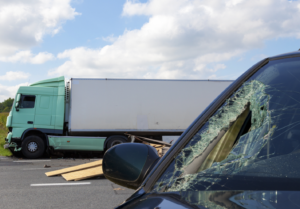
Establishing liability in accident cases involving large commercial trucks can be complex. As an initial matter, you’ll have to prove that someone’s careless, reckless, or wrongful act caused the crash.
This means proving:
- The at-fault driver owed you a legal duty of care
- They breached their duty of care
- The breach was the cause of your accident
- You suffered damages
Our lawyers will gather all available evidence to establish these elements, including:
- Truck’s black box recording device
- Examine the driver’s hours-of-service logs
- The trucking company’s maintenance records
- Gather hard evidence from the crash scene
- Collect opinions from expert witnesses
What to Do After a Chicago Truck Accident
Safety and medical needs come first. If you are able:
- Move out of immediate danger and call 911 when anyone is injured, traffic is unsafe, a vehicle leaves the scene, or emergency help is needed.
- Obtain appropriate medical evaluation and follow the treatment plan you receive. Do not delay needed care to collect evidence.
- Exchange required driver, vehicle, company, and insurance information. Photograph identifying numbers, names, plates, tractor and trailer markings, and documents only when it is safe and lawful.
- Ask witnesses for their names and contact details. Do not rely on the police report to contain every witness or observation.
- Photograph or record the vehicle positions, damage, road, traffic controls, debris, tire marks, cargo, weather, surrounding businesses, and visible injuries when safe.
- Keep the report number, medical paperwork, bills, receipts, work-loss records, insurer messages, claim numbers, photographs, and damaged personal property.
- Notify your own insurer as the policy requires. Before giving a recorded statement or signing a broad authorization or release, understand who is requesting it and what claim it concerns.
- Do not sign a final release or accept a check intended as full settlement until you understand the claims and parties it resolves.
Illinois State Police states that each driver must file a crash report when an Illinois crash causes death, bodily injury, or more than $1,500 in property damage when all drivers are insured; the threshold is $500 if any driver is uninsured. If a police officer does not appear, ISP says the report should be filed as soon as possible and within 10 days. Its online system is limited to specified single-vehicle, property-damage-only crashes.
Who May be Liable in a Truck Crash?

Assuming that the truck driver caused the crash, a third party may ultimately be responsible for paying your damages. Most truck drivers are employees. Their employer can be held liable when the driver causes a wreck.
Examples of some parties that could be at fault in your case include:
- The trucking company
- Truck maintenance companies
- A company responsible for inspecting the vehicle
- A company responsible for the truck’s cargo
- A government agency
- A company responsible for attaching the truck’s trailer
If you were seriously injured in a collision, the trucking company is already investigating to determine the cause. You deserve an experienced lawyer in your corner who can fight on your behalf. Reach out to our legal team to learn more about how we can help.
What Kind Of Injuries Do People Sustain in Truck Accidents?
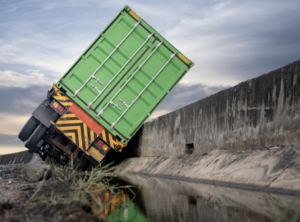
Because trucks are so large and heavy, accident victims often suffer severe injuries. If you’re struggling with painful injuries, our experienced accident lawyers in Chicago can help.
We often represent clients who have sustained:
- Traumatic brain injuries
- Broken bones
- Spinal cord injuries
- Crushing injuries
- Nerve damage
- Whiplash injuries
- Soft tissue damage
- Head and neck injuries
- Concussions
- Back injuries
- Organ damage
- Burns
- Amputations
- Paralysis
- Catastrophic injuries
- Wrongful death of a loved one
An injury can be expensive to treat, even if you’re expected to make a full recovery. Whether your injuries were relatively minor or life-changing, don’t hesitate to reach out to our lawyers to determine whether you’re entitled to compensation.
Illinois Rules That May Affect a Truck Accident Claim
Comparative fault
Illinois uses modified comparative fault in covered negligence actions. Under 735 ILCS 5/2-1116, recovery is barred if the claimant’s contributory fault is more than 50% of the proximate cause of the injury or damage. At 50% or less, recoverable damages are reduced in proportion to the claimant’s fault.
An insurer’s percentage is not a court finding. The allocation depends on the evidence and applicable claims.
Filing deadlines
735 ILCS 5/13-202 generally requires an action for personal injury to be commenced within two years after the claim accrues. That is not a universal deadline for every person, defendant, or truck-related claim.
For example, 745 ILCS 10/8-101 generally imposes a one-year limitation on many civil actions for injury against an Illinois local public entity or its employee. Wrongful-death, legal-disability, property, product, contract, government, and other claims can involve different accrual or limitation rules.
Insurance policies can also contain notice, cooperation, or claim conditions that matter before a lawsuit deadline. Do not use an anniversary date or online article to calculate the last day to act.
Federal motor-carrier rules
Some interstate motor carriers, drivers, and commercial motor vehicles are subject to federal safety and recordkeeping rules, including parts of Title 49 of the Code of Federal Regulations. Applicability can depend on the vehicle, cargo, driver, trip, operation, and an exemption or exception.
A regulatory issue may be relevant evidence, but it does not automatically establish civil liability or damages. The rule, covered party, facts, and causal relationship must be analyzed.
We Handle All Types of Trucking Accident Cases
We handle all types of truck accident cases, including those involving:
- Rollovers
- Head-on collisions
- Jackknife accidents
- Rear-end collisions
- Sideswipe accidents
- T-bone accidents
- Highway accidents
- Intersection accidents
- Interstate accidents
- Accidents involving pedestrians and bicyclists
- Single and multi-vehicle crashes
- Override accidents
- Tractor-trailer tire blowout
- Tow truck accidents
Trucks are often carrying dangerous cargo. If your accident involved improperly secured cargo or a cargo spill, we can help you determine who was responsible.
Frequently Asked Questions
What Should I Do After a Semi-Truck Accident?
There are a few steps you should take after a semi-truck accident.
These steps can help you protect your claim and your health.
You should always do the following after a wreck:
- Call 911. You should always call 911 after the collision. The dispatcher will send officers to the scene to investigate the accident. These officers will also create an accident report noting important details about the wreck and possibly make preliminary determinations of fault. The dispatcher can also send emergency medical services to the scene.
- Exchange information. You should exchange contact with the driver responsible for the crash. You will need this to file a claim against the driver/trucking company. You should also obtain the info for any witnesses to the accident. Their testimony might come into play if your case goes to court.
- Seek Immediate Medical Attention. You should seek prompt medical care after your crash. You can visit the hospital in an ambulance or follow up with your medical provider. Seeking prompt medical attention will ensure that you receive treatment for all your injuries — visible and hidden. It will put you on a quicker path to recovery and prevent the insurance company from claiming you failed to mitigate your damages.
You should also reach out to a truck accident lawyer as soon as possible after the accident. Your attorney will explain your rights and options for recovering compensation.
They will also help you avoid mistakes that will hurt your claim.
When Should I Contact a Truck Accident Lawyer?

You should contact a truck accident lawyer as quickly as you can after your accident. Insurance companies are aggressive. They will likely try to influence the direction of your case from its earliest moments. They prefer to get in touch you before you have legal representation.
They may try to solicit recorded statements from you that they can use against you later. They may try to get you to sign a medical records release so they can scrutinize your medical history for preexisting conditions. Or they may even offer you a quick settlement — one that doesn’t fully account for your damages — in hopes that you’ll sign it and go away.
You have one main way of combating these aggressive tactics: contacting a lawyer. Your lawyer can protect your rights from the beginning of your case. They can help you navigate your claim and avoid major mistakes that could hurt your chances of recovering compensation.
Can I Recover Compensation If I’m Being Blamed for a Truck Accident?
It depends on how much of the blame is allocated to you. Illinois follows a modified comparative negligence law. If the insurance company can prove that you were at least 51% responsible for your injuries, you’ll lose your right to compensation entirely.
However, if you were less than 51% liable, you can obtain a portion of your settlement or verdict. Your compensation is simply reduced by your percentage of fault.
How Much Time Do I Have To File a Lawsuit After a Truck Accident in Illinois?

The statute of limitations in Illinois is two years in most personal injury cases. That means you have only two years to file a lawsuit or you risk losing your right to compensation entirely.
The clock is already ticking, and trucking accident claims can be complex. To get the legal advice you deserve, call to schedule a free consultation.
Understand the Insurance Request Before You Respond
An injured person may hear from the driver’s insurer, a carrier’s commercial insurer, another company’s insurer, a third-party administrator, or the person’s own insurer. Those parties do not all have the same contractual relationship with the injured person.
An adjuster may investigate fault, whether the crash caused the claimed injuries, treatment, losses, policy coverage, and the identity of responsible parties. A person may have cooperation duties under a policy that covers them but can still ask what information is requested, why it is needed, and how it will be used.
If you were injured or fault is disputed, consider obtaining advice before giving a recorded statement to another party’s insurer, signing a broad medical authorization, allowing an inspection that could alter or dispose of evidence, accepting a settlement check, or signing a release.
A release can end claims against the people and companies it covers. Do not assume that resolving vehicle damage also resolves the bodily-injury claim, or that a commercial policy will pay medical bills as they arrive.
The Illinois Department of Insurance’s third-party auto-claim guide explains the general claim-investigation process and cautions that a signed release normally makes the offered amount the only amount received from the other driver and insurer. It also explains that property-damage and bodily-injury claims can be resolved separately. The wording of the actual release and the parties it covers still control.
Contact a Chicago Truck Accident Attorney for a Free Initial Consultation
If you or a loved one was injured in a truck wreck, it’s important to act quickly. Reach out to our lawyers to discuss your case today. With an experienced Chicago truck accident lawyer by your side, you’ll greatly improve your chances of recovering the maximum compensation you deserve. If AOC accepts a truck-accident matter on a contingency basis, the attorney fee is calculated as an agreed percentage of the recovery rather than billed by the hour. You do not owe an attorney fee unless the firm obtains a recovery for you.
Client Review
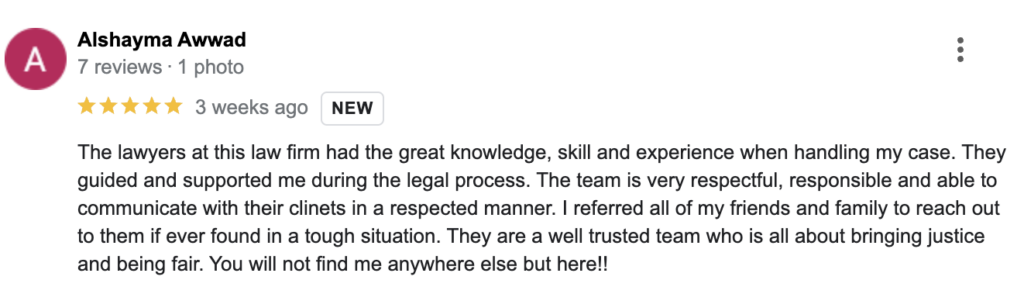
Read more of our Google reviews.
Resources & Information
- U.S. Department of Transportation
- File a Truck Accident Claim
- Illinois Department of Transportation
- Parking Restrictions
*Disclaimer – we do not endorse these companies or profit from having them listed on our website.
Additional Truck Accident Resources
- Amazon Van and Truck Accidents
- I-55 Accidents
- I-90 Accidents
- Garbage Truck accidents
- How Long Does It Take To Settle an 18-Wheeler Accident Case?
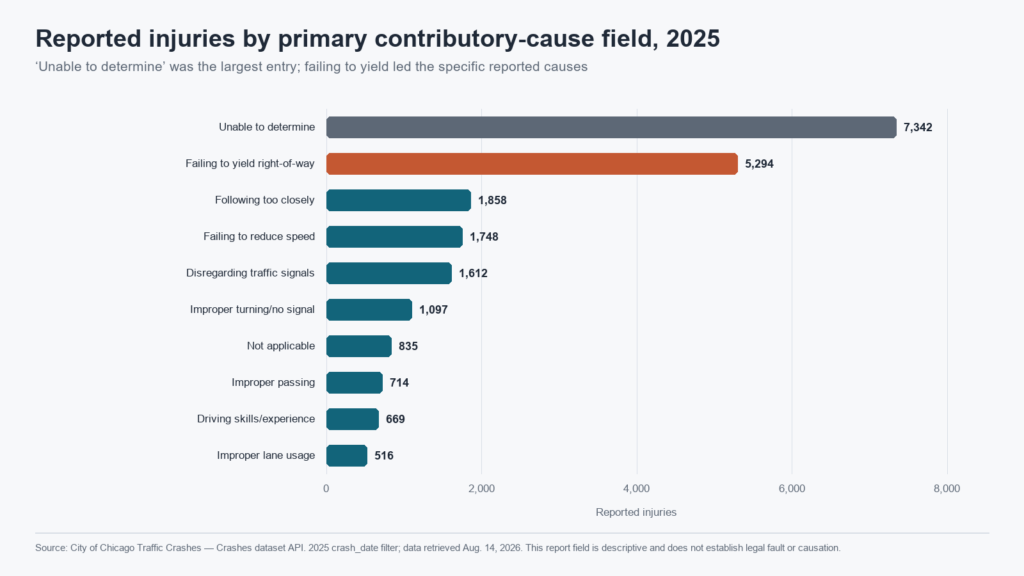
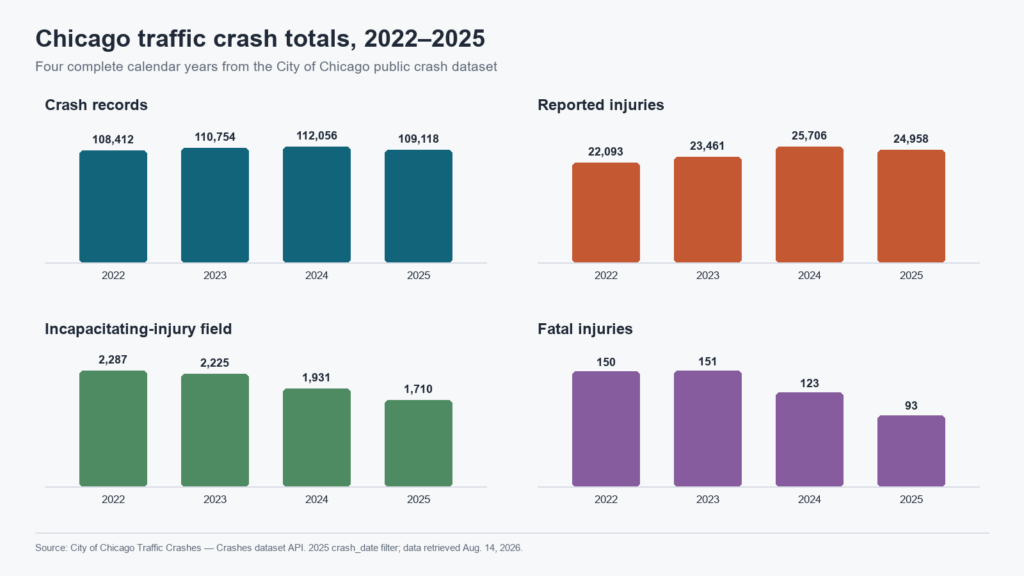
Infographic
Contact Our Chicago Truck Accident Lawyers
If you were injured in a truck accident in Chicago involving a commercial vehicle, Attorneys of Chicago can review the basic facts and evidence, identify applicable deadlines, and explain to you whether the firm may be able to help.
Attorneys of Chicago Personal Injury Lawyers
134 N. LaSalle Street, Suite 2160
Chicago, IL 60602
Phone: (312) 766-4878
